
Understanding how to avoid google penalties is crucial for maintaining your website’s search visibility and protecting your online reputation. In 2026, digital landscapes are more competitive than ever, and a Google penalty can significantly impact your site’s performance, affecting traffic and potentially harming your business. By familiarizing yourself with Google’s guidelines and engaging in ethical SEO practices, you can protect your site and ensure it continues to rank well in search results.
Last updated: March 2026
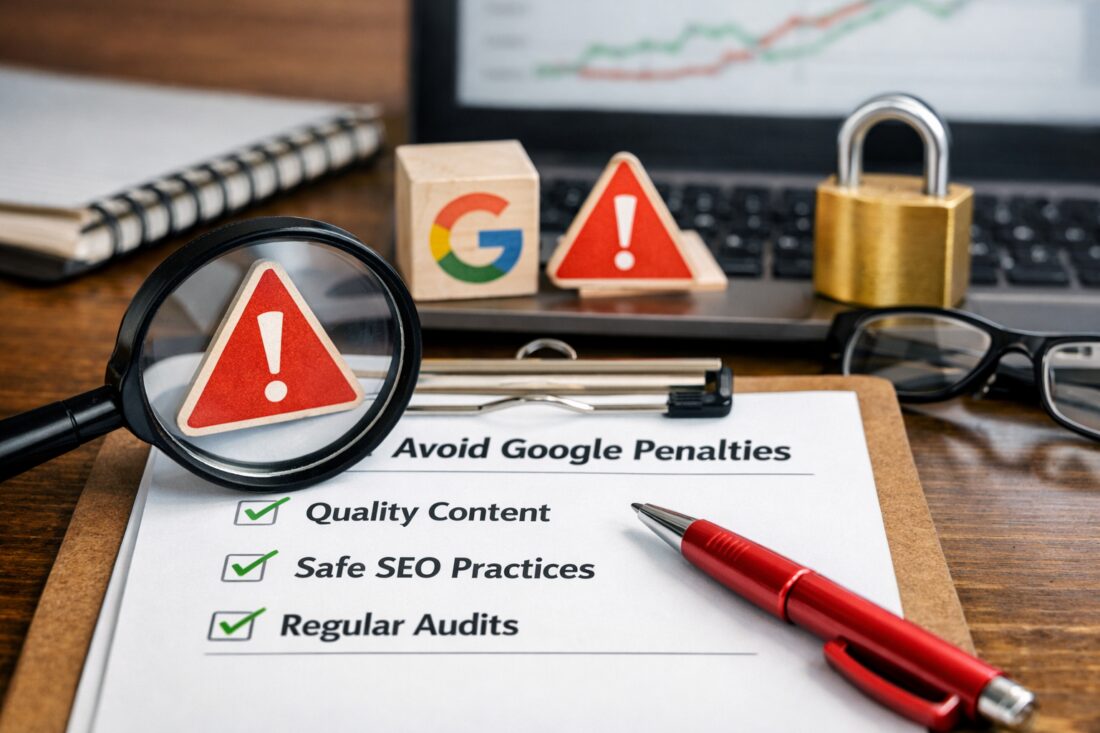
Understanding Google Penalties
Google penalties are sanctions applied to websites that violate Google’s Webmaster Guidelines. They can drastically reduce a site’s visibility in search results, leading to a significant drop in web traffic. There are two main types of penalties: manual actions and algorithmic penalties. Manual actions occur when a human reviewer at Google determines your site has breached guidelines, while algorithmic penalties are automatic, resulting from updates to Google’s search algorithms.
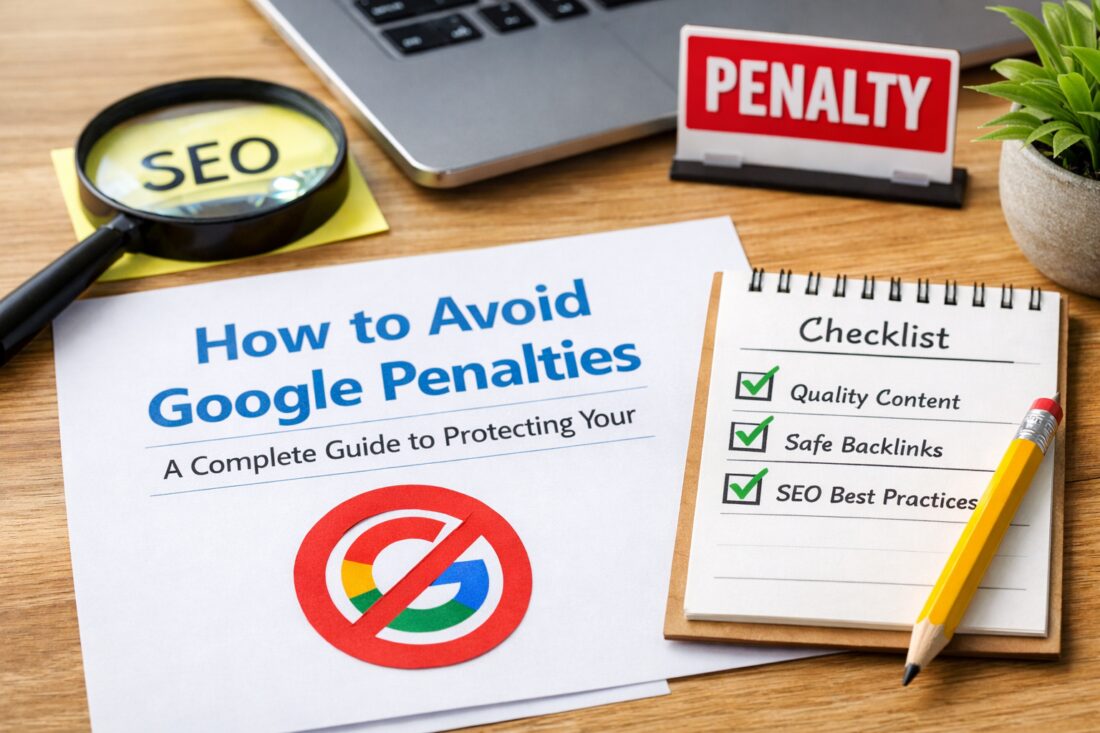
Staying updated with Google’s guidelines is paramount. Industries such as finance or healthcare, which handle sensitive information, may face stricter scrutiny, and penalties can vary accordingly. For instance, a site in the healthcare sector might be penalized more heavily for misinformation compared to a general news site.
Tip: Regularly check Google’s Search Central for updates to their guidelines to preemptively adjust your strategies.
How to Identify if Your Site is Penalized
Identifying a Google penalty can be challenging, but there are telltale signs. A sudden drop in website traffic is often the first indicator. Utilizing tools like google Search Console can help diagnose penalties by checking for manual action notifications. Analytics tools can also identify unusual patterns that suggest an algorithmic penalty. It’s essential to differentiate between genuine penalties and false positives, which might be caused by seasonal traffic changes or technical glitches.
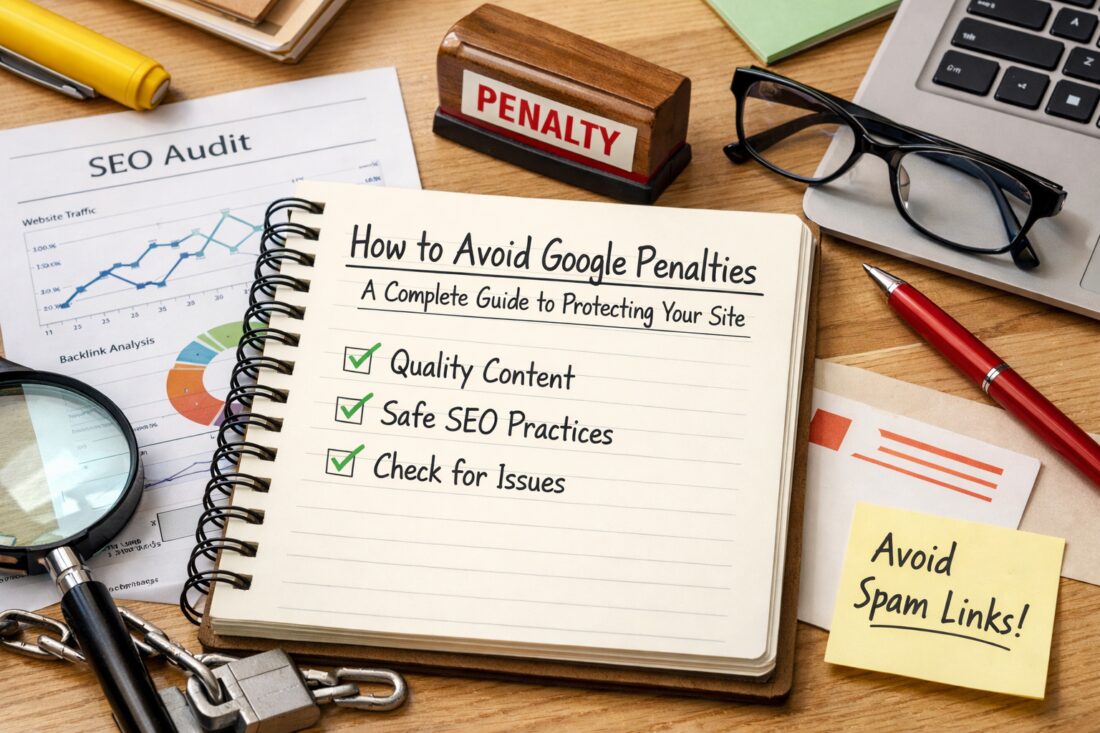
For example, if you notice a traffic drop coinciding with a Google algorithm update, it’s worth investigating your site for potential issues. False positives can often be ruled out by comparing your site’s performance against industry benchmarks.
Tip: Regularly monitor your analytics and set up alerts for drastic changes in traffic or rankings.
Proven Strategies to Avoid Google Penalties
Quality content and user experience are at the heart of avoiding Google penalties. Engaging in ethical SEO practices, such as using white-hat techniques, is crucial. This includes creating original content, optimizing for user intent, and ensuring your site is accessible and user-friendly. Regular website audits and updates are necessary to keep your content relevant and your SEO strategies aligned with current standards.
Finding the right balance between SEO optimization and user intent is key. For example, while keyword optimization is important, overuse can lead to keyword stuffing, which is penalized by Google. Instead, focus on creating content that naturally incorporates keywords and provides value to the user.
Tip: Regularly conduct user testing to ensure your site meets user expectations and addresses their needs effectively.
Common Mistakes Leading to Google Penalties
Several common mistakes can lead to Google penalties, such as keyword stuffing, duplicate content, and poor mobile optimization. Engaging in link schemes or buying backlinks can also trigger penalties, as these practices violate Google’s guidelines. Misconceptions about “quick fix” SEO tactics, like using hidden text or cloaking, can also lead to severe penalties.
For instance, a site that excessively uses exact-match keywords might initially see a boost in rankings, but this is often short-lived as Google detects and penalizes such practices. Similarly, failing to optimize for mobile can result in a poor user experience, which Google penalizes by lowering search rankings.
Tip: Use tools like Google’s Mobile-Friendly Test to ensure your site is optimized for all devices.
Alternatives to Risky SEO Practices
Embracing ethical SEO strategies over black-hat techniques is not only safer but also more sustainable in the long run. Organic growth achieved through quality content and genuine engagement is far more beneficial than manipulative tactics. Content marketing is a powerful alternative, focusing on providing value to users and building a loyal audience.
For example, instead of buying backlinks, consider building relationships with influencers in your industry to gain natural backlinks. This not only improves your SEO but also enhances your brand reputation. A comparison table could be beneficial here to illustrate the differences between ethical and unethical practices.
Tip: Leverage social media platforms to promote your content and engage with your audience to drive organic growth.
Advanced Considerations in Avoiding Google Penalties
The role of AI and machine learning in Google’s evolving algorithms cannot be overstated. These technologies help Google better understand user intent and improve search results. Local SEO is another crucial factor, as regional differences can influence penalties. Staying ahead of algorithm updates is vital, as this knowledge allows you to anticipate changes and adjust your strategies accordingly.
For instance, emerging technologies like voice search are altering how users interact with search engines. Understanding these trends can help you optimize your site to avoid penalties and improve your rankings. Being proactive rather than reactive is essential in this fast-evolving landscape.
Tip: Subscribe to industry blogs and forums to stay informed about the latest SEO trends and algorithm updates.
Frequently Asked Questions About Avoiding Google Penalties
What are the most common Google penalties?
The most common penalties include those related to unnatural links, thin content, and cloaking. These can significantly impact your site’s visibility.
How can I recover from a Google penalty?
Recovering involves identifying the issue, correcting it, and submitting a reconsideration request to Google if it’s a manual action. This process can take weeks to months.
Can duplicate content lead to a Google penalty?
While duplicate content might not directly lead to a penalty, it can harm rankings by splitting link equity. Ensure unique content to avoid such issues.
Is it possible to avoid penalties without an SEO expert?
Small business owners can avoid penalties by following Google’s guidelines and using available resources, though expert advice can be beneficial for complex issues.
What is the role of backlinks in Google penalties?
Backlinks can help SEO if they are natural and relevant. However, manipulative link schemes can lead to severe penalties from Google.
How often does Google update its algorithms?
Google updates its algorithms frequently, with major updates occurring several times a year. Staying informed is crucial for maintaining rankings.
Can a site be penalized for slow loading speeds?
Yes, slow loading speeds can affect user experience and lead to lower rankings, as Google prioritizes fast, user-friendly sites.
How do I know if a penalty is manual or algorithmic?
A manual penalty will appear as a notification in Google Search Console, while algorithmic penalties usually coincide with algorithm updates.
Are there penalties specific to local SEO?
Local SEO penalties can occur due to spammy local listings or inconsistent NAP (Name, Address, Phone Number) details. Ensure accuracy to avoid such penalties.
What are the latest Google penalty updates in 2026?
In 2026, Google has focused on improving user experience and penalizing sites with intrusive interstitials and poor mobile experiences.
How does user experience affect Google penalties?
User experience is critical; poor UX can lead to lower rankings and potential penalties as Google algorithms prioritize user-centric sites.
Conclusion
Adhering to Google’s guidelines is essential for avoiding penalties and maintaining your site’s search visibility. Emphasizing ethical SEO practices and continuous learning will help you stay ahead in the competitive digital landscape. Consider consulting with an SEO expert or conducting a comprehensive site audit to safeguard your online presence and ensure long-term success.